Beyond the Task List: 5 Ways to Build a Great NDIS Support Team
6/7/2026
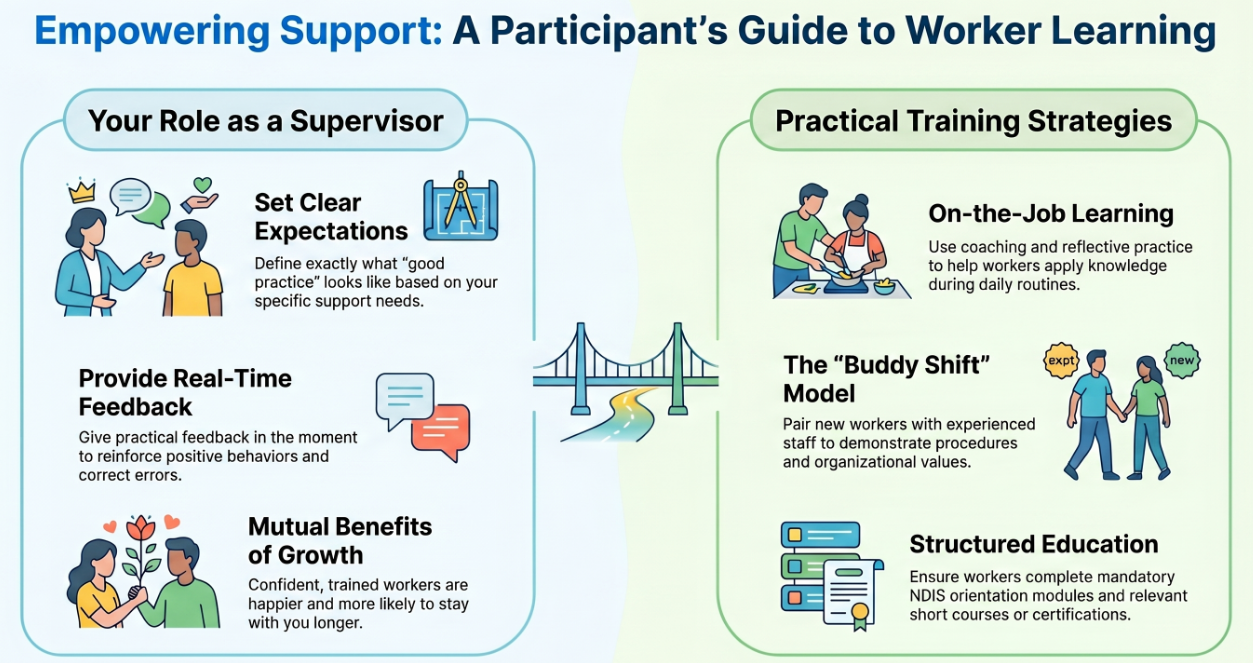
Having a great support team can make a huge difference to your daily life. While support workers play an important role, quality support doesn't happen automatically. It develops through communication, trust, learning, and a shared understanding of what matters most to you.
Many people focus on practical tasks such as personal care, household activities, or community access when thinking about support. Those tasks are important, but they are only one part of the picture. The best support workers take the time to learn your preferences, respect your choices, and continually improve their skills.
Whether you self-manage your supports or work with a provider, there are simple things you can do to help your support team grow and deliver better outcomes. Here are five practical ways to build a stronger and more effective NDIS support team.
1. Remember That You Are the Expert in Your Own Life
Support workers may have qualifications, training, and experience, but nobody understands your needs better than you do.
You know your routines, communication preferences, health requirements, cultural background, and personal goals. Sharing this knowledge helps workers provide support that is personalised rather than generic.
For example, a worker may have completed training in manual handling, medication assistance, or behaviour support. However, they still need to learn how you like things done and what helps you feel comfortable, safe, and respected.
When you actively communicate your preferences, you help workers build confidence and perform their role more effectively. It also reduces misunderstandings and helps create more consistent support experiences.
In many ways, you are helping shape how your support team works. Your input is one of the most valuable resources they have.
2. Focus on Attitude, Not Just Skills
Technical skills are important, but they are only part of what makes a great support worker.
A worker may know how to use equipment safely or complete required tasks, but quality support also depends on communication, respect, empathy, and professionalism.
Think about the qualities that matter most to you. Do you value someone who listens carefully? Someone who respects your independence? Someone who takes the initiative while still following your preferences?
These qualities often have a bigger impact on your daily experience than technical skills alone.
The NDIS Workforce Capability Framework highlights the importance of person-centred support, dignity, respect, and effective communication. These values help workers build positive relationships and deliver support that aligns with each participant's goals and choices.
Regular conversations about expectations can help reinforce these qualities and ensure everyone is working towards the same standard of support.
3. Make Buddy Shifts Count
Buddy shifts are commonly used to help new support workers learn the role. However, not every experienced worker is automatically a good trainer.
A successful buddy shift requires more than simply showing someone how things are done. The person providing the training should be patient, approachable, and willing to explain the reasons behind routines and support practices.
Good buddy workers encourage questions and create an environment where new staff feel comfortable asking for clarification. This helps prevent mistakes and improves confidence.
Most importantly, the buddy shift should include your input.
For example, if a new worker is learning how to support you with transfers, communication, or daily routines, your perspective is essential. You can explain what works well, what should be avoided, and what helps you feel safe and comfortable.
When participants are actively involved in buddy shifts, new workers often learn faster and gain a clearer understanding of individual support needs.
4. Give Feedback Early and Often
One of the most effective ways to improve support quality is through regular feedback.
Many people wait until a formal review meeting to raise concerns or discuss improvements. While scheduled reviews are useful, small conversations throughout the year are often more effective.
If a worker does something particularly well, let them know. Positive feedback helps reinforce good practices and boosts confidence.
If something isn't working, address it respectfully and as soon as possible. Small issues can become larger problems if they are left unspoken.
For example, if a worker consistently arrives late, forgets part of a routine, or communicates in a way that doesn't work for you, a simple conversation can often resolve the issue before it becomes a pattern.
Feedback should be a two-way process. Encouraging workers to share their observations and suggestions can strengthen communication and help build a positive working relationship.
The goal isn't criticism. It's continuous improvement.
5. Support Learning and Reflection
Learning doesn't stop after induction training.
The most effective support teams are made up of people who continue learning throughout their careers. This includes formal training, practical experience, reflective practice, and discussions after challenging situations.
When workers have opportunities to learn and improve, they generally feel more confident in their role. Confidence often leads to better decision-making, higher job satisfaction, and improved support outcomes.
Reflection is particularly valuable after incidents, near misses, or difficult situations. Taking time to discuss what happened, what worked well, and what could be improved helps workers develop their skills and reduce the likelihood of similar issues occurring in the future.
A workplace culture that encourages learning benefits everyone. Workers feel more supported, and participants receive safer, more consistent, and higher-quality support.
Building Better Supports Starts with Collaboration
Strong support teams aren't built overnight. They grow through open communication, mutual respect, and a commitment to learning.
As an NDIS participant, your role extends beyond simply receiving support. You have valuable knowledge and insights that can help workers understand your needs and provide better support.
By sharing your expertise, encouraging learning, giving constructive feedback, and setting clear expectations, you can help create a support team that works effectively alongside you.
The result is often greater consistency, stronger relationships, and support that genuinely reflects your goals, preferences, and choices.